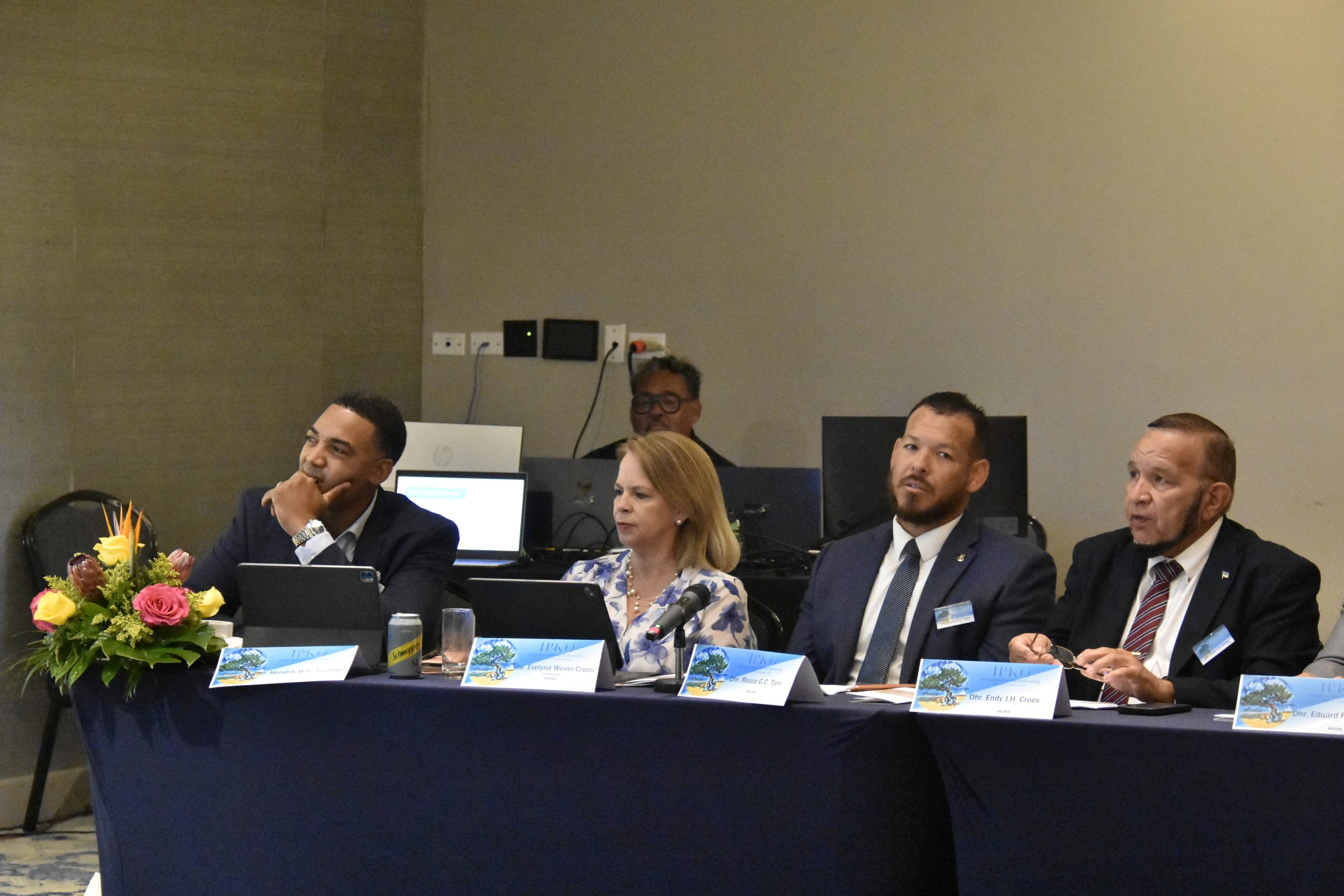
The leader of the MEP faction, Evelyn Wever-Croes, expressed serious concern regarding the way the AVP–FUTURO Government handled the HOFA issue within the framework of the Interparliamentary Kingdom Consultation (IPKO). According to the MP, it is essential that Aruba is properly represented at meetings of this kind, where representatives from Curaçao, Sint Maarten, and the Netherlands are present and where decisions that directly impact Aruba may be influenced.
Wever-Croes pointed out that among the Dutch parliamentarians participating in IPKO are members of the Tweede Kamer and the Eerste Kamer — the bodies that will ultimately decide on the HOFA law. “The Netherlands will vote on HOFA, not Aruba,” she emphasized, adding that this makes it crucial to clearly explain how the process unfolded and what Aruba’s real position is.
According to the MEP leader, HOFA was approved without broad consensus in the Parliament of Aruba. She accused Prime Minister Mike Eman, Geoffrey Wever, and Gerlien Croes of acting without broad parliamentary support, describing the decision as one that bypassed Parliament and the people of Aruba, leaving the country in a delicate position today.
Wever-Croes also expressed regret that the President of Parliament, Marlon Sneek, did not include HOFA as a formal agenda item during IPKO. Nevertheless, she stated that the MEP faction succeeded in submitting documentation to leaders of the Dutch delegation in order to present their point of view.
Arguments against HOFA
MEP maintains that HOFA contradicts prior agreements discussed during IPKO 2022 and 2025 and may conflict with the Constitution. Furthermore, according to Wever-Croes, more than 10,000 citizens have signed against the law, indicating a lack of broad public support.
She added that, according to recent information, Aruba’s financial situation is showing positive progress. A letter from CAFT reportedly indicated that within two years Aruba could achieve its debt reduction targets. For MEP, this raises questions about the necessity and urgency of HOFA.
The MEP faction stated that during IPKO they presented what they describe as “the truth of the situation” of Aruba to the Dutch delegations, aiming to counter what they consider manipulated information from the AVP–FUTURO Government.
Debate continues
The discussion surrounding HOFA demonstrates that, beyond interparliamentary dialogue, there is a deep political debate within Aruba itself regarding autonomy, financial management, and relations with the Netherlands. According to MEP, since the AVP–FUTURO Government took office, problems have continued to arise.
For MEP, participation in IPKO is not merely symbolic, but a strategic instrument to defend Aruba’s position at the international level. The remaining question is whether the arguments presented will influence the final decisions that will be taken in the Netherlands.