

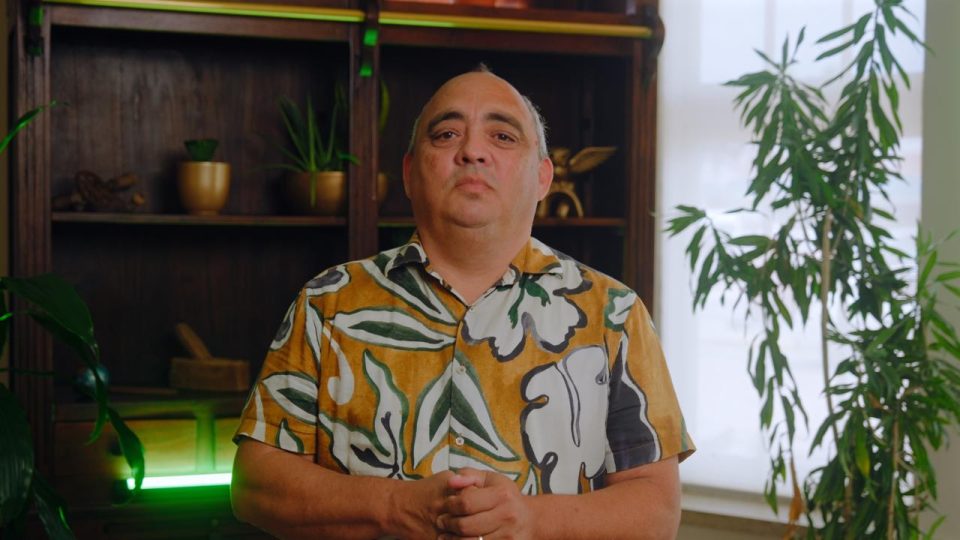
In the context of World Environment Day (June 5) and heading towards World Oceans Day (June 8), the director of the Department of Nature and Environment (Directie Natuur en Milieu – DNM), Gisbert Boekhoudt, highlighted the importance of integrating nature protection into the way Aruba lives, develops, and manages its island.
According to Boekhoudt, the Department of Nature and Environment is involved in the international process of “Man and the Biosphere” (MAB), a UNESCO initiative that seeks to create a balance between nature conservation, economic development, and human activity.
“We are working to incorporate nature into the decisions we make as a community and into the way people use and develop Aruba,” Boekhoudt expressed.
The director explained that Aruba has developed a National Biodiversity Strategic Action Plan (NBSAP), a national plan that was approved in 2024 and forms an important foundation for the Biosphere Reserve vision.
According to Boekhoudt, the focus of “Man and the Biosphere” recognizes that nature cannot be viewed separately from the community. The system includes protected areas, transition zones, and also areas where people live, work, and welcome visitors.
“The entire island of Aruba forms part of this vision. Nature is not only found within protected areas; it connects with our daily lives, tourism, economy, and community,” he explained.
The Department of Nature and Environment, as a public entity in the environmental field, works on policy preparation, legal recommendations, and the revision of legislation related to environmental protection and the designation of protected areas.
Boekhoudt emphasized that this process is carried out in collaboration with various stakeholders, land users, and technical experts. To gather data, DNM combines natural sciences, remote sensing, and scientific and historical information to evaluate habitat conditions and the presence of vulnerable species.
The director also mentioned that Aruba’s environmental vision connects directly to various initiatives already underway, including reforestation projects, natural habitat restoration, and the strengthening of the Aruba Marine Park.
During the Common Good Conference, the Government of Aruba also signed various MoUs and agreements focused on sustainability, environmental restoration, and international scientific cooperation. According to Boekhoudt, this type of collaboration is essential to strengthen technical capacity and sustainable management in the long term.
In reference to coastal and marine areas, Boekhoudt indicated that there are various human activities that impact biodiversity and ocean conditions. For that reason, Aruba seeks a balance between conservation and economic development.
“There is room for economic and maritime activities, but the challenge is to achieve this in a balanced and sustainable manner,” he concluded.
According to the Department of Nature and Environment, the next phase for Aruba will be to continue strengthening cooperation between government, community, the private sector, and environmental organizations to build a development model that places nature and sustainability as an integral part of Aruba’s future.