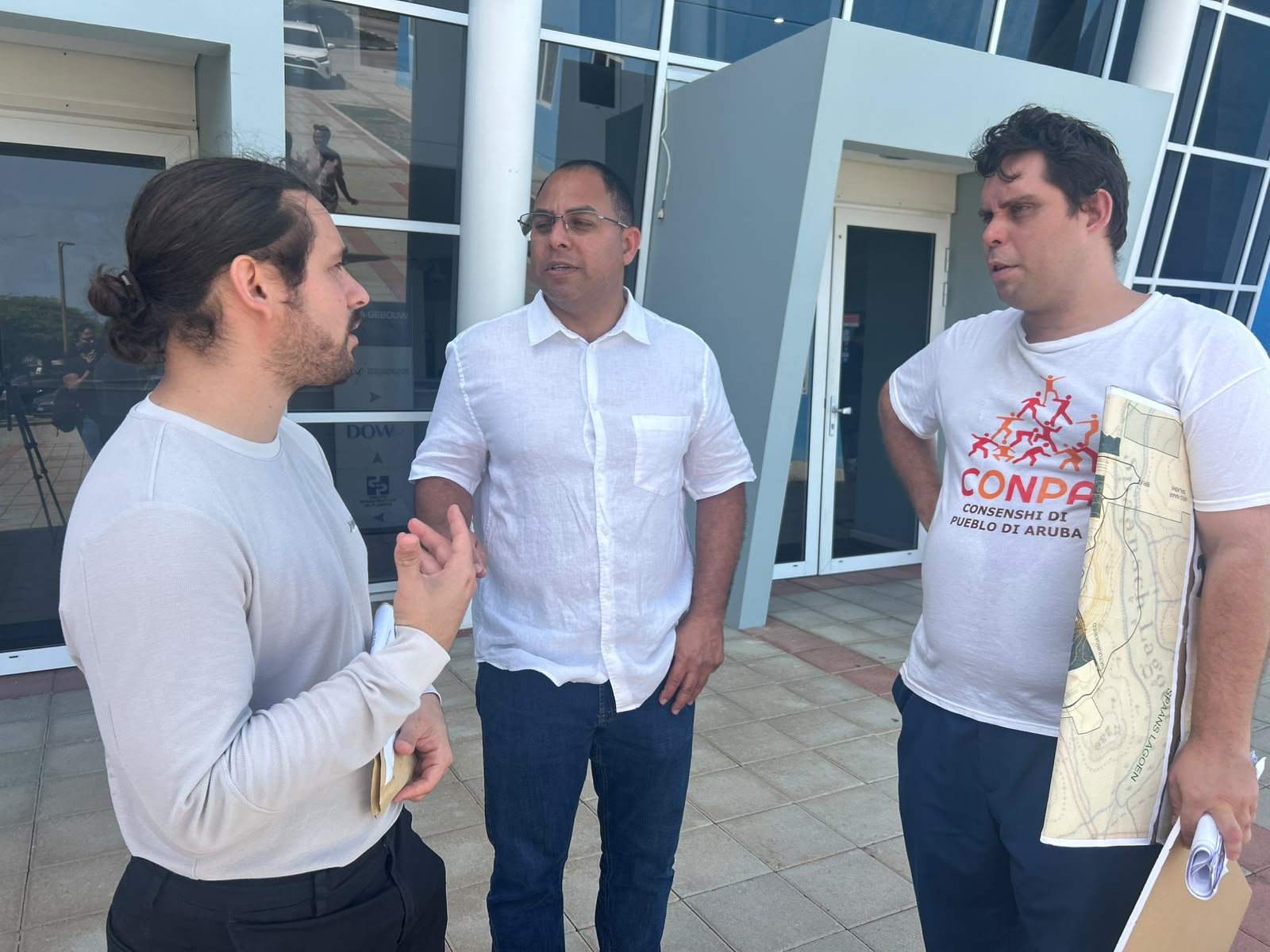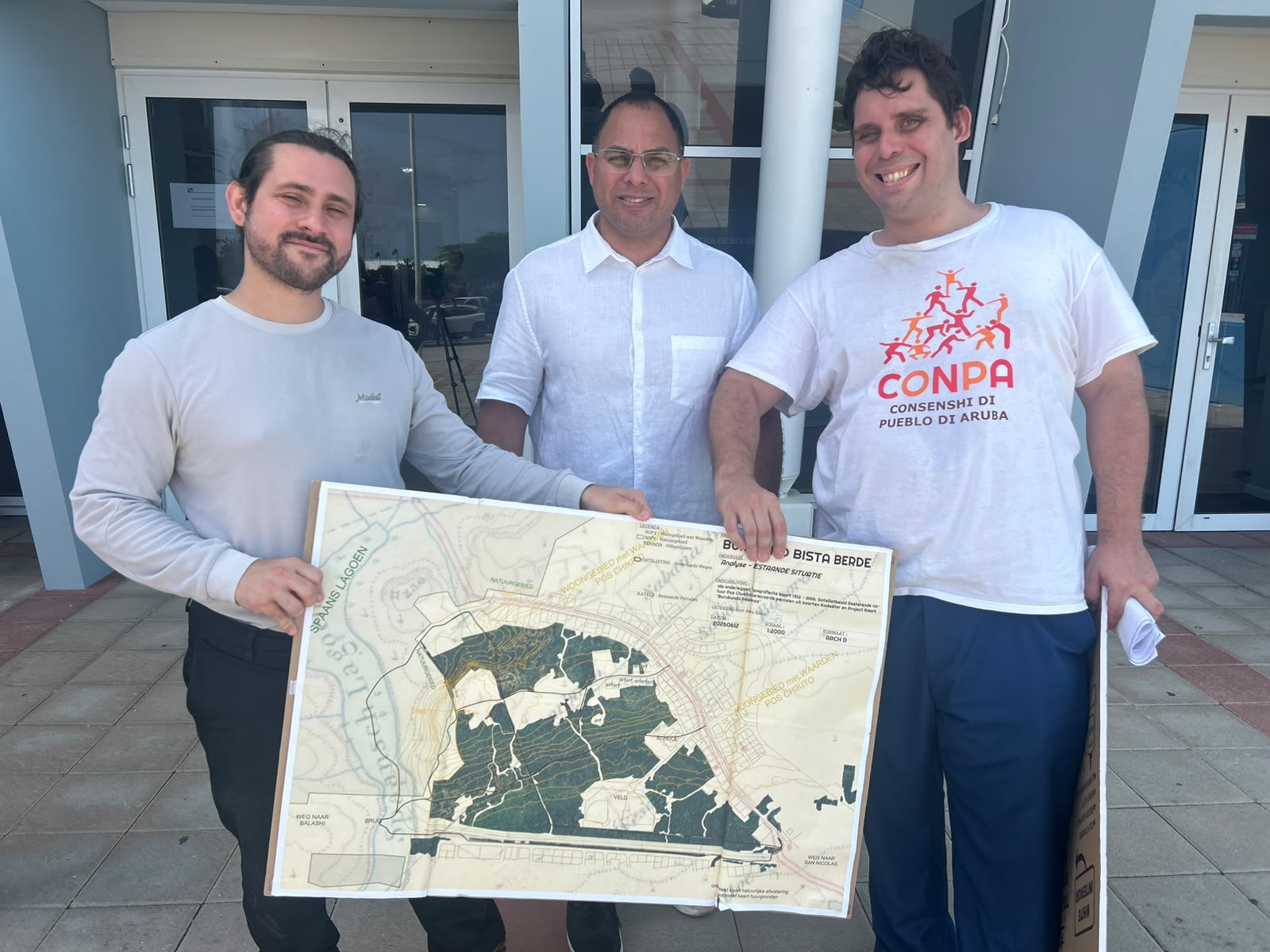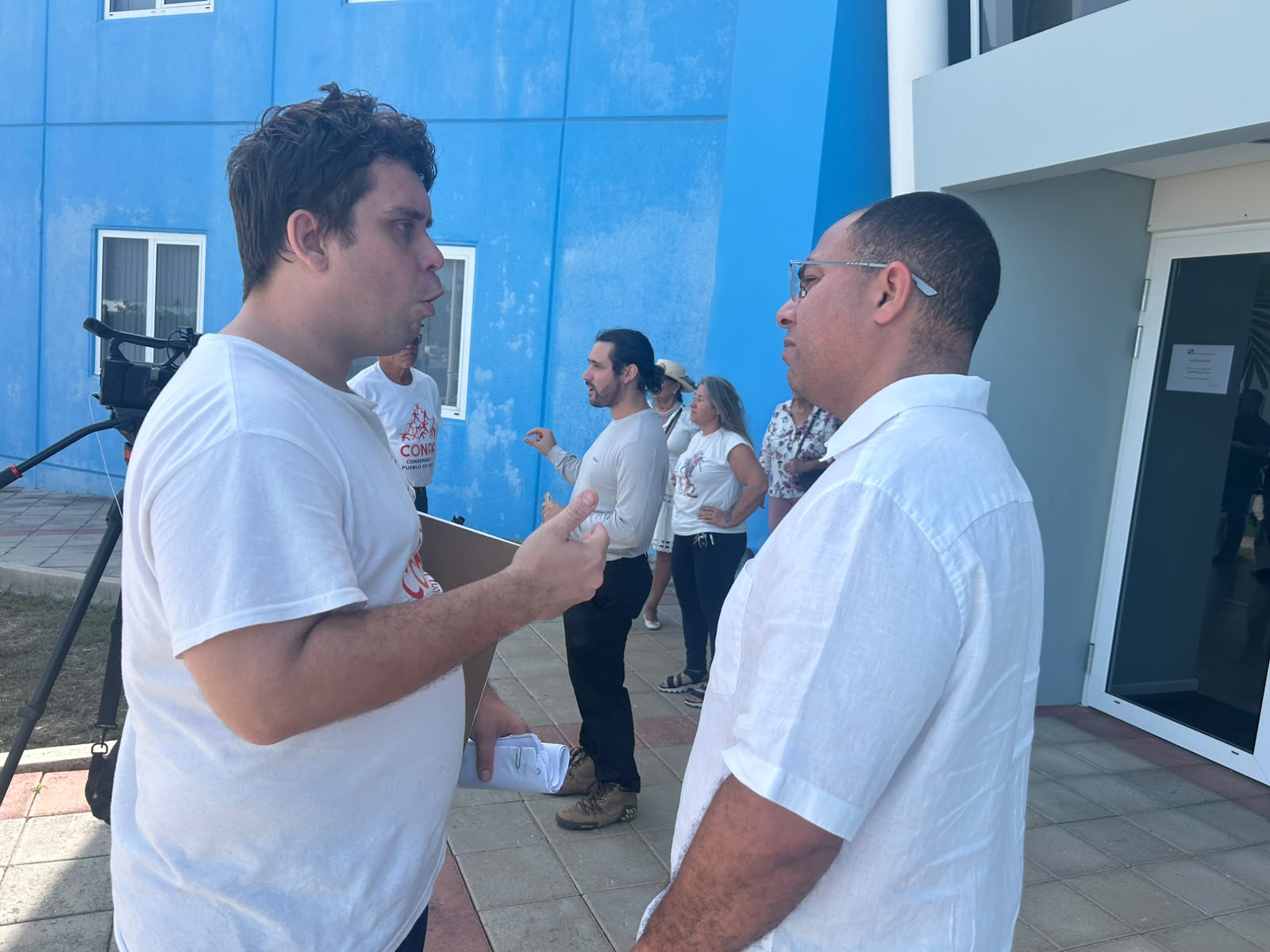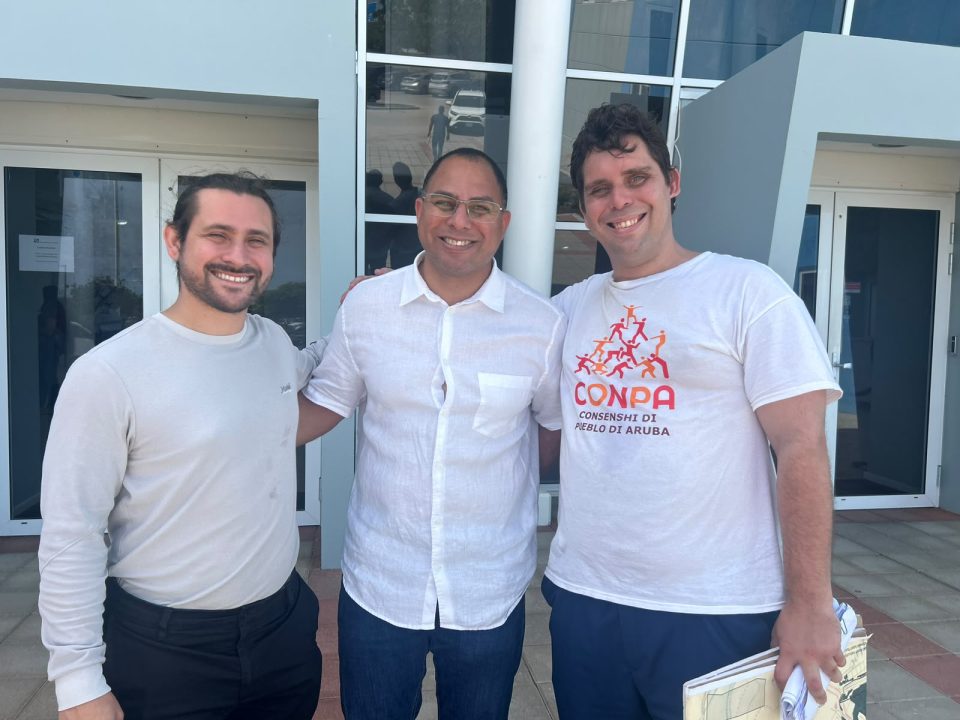
A country is not built with cement alone. It is built with vision. According to PPA faction leader Eduard Pieters, Aruba is facing a dangerous trend where large-scale projects are pushed forward without the necessary planning. Following a meeting with Fundacion Conpa, Pieters expressed his concern regarding the Burubundu Residences project, a development that, according to Pieters, raises serious questions regarding spatial planning, infrastructure, and environmental protection.
Not against development, but against development without vision Pieters emphasized that Aruba has a real need for housing. However, the solution is not to continue expanding Aruba horizontally without an integral plan, sacrificing our nature, safety, and historical heritage. “We have other options.”
According to the MP, Aruba needs to start thinking differently. Instead of continuing to develop natural areas with large-scale residential projects, the Government should look at how to strengthen Oranjestad and San Nicolas through more vertical development and a serious revision of the Spatial Development Plan with Regulations (ROPV). “We need to change the way we develop in Aruba.”
A major project must be based on research, not improvisation According to Pieters, after studying the documentation presented by Fundacion CONPA, many fundamental questions remain unanswered. He pointed to the lack of studies on safety, mobility, access for ambulances and firefighters, urban impact, and other aspects that must form part of any project of this magnitude. “You cannot present a plan of this size without the research that must support the decision.” For PPA, the concern is not just the number of houses, but the lack of planning that could affect the entire community.
Five years later, it is time to modernize the ROPV Pieters also stated that the ROPV, introduced precisely to prevent uncontrolled development, needs to be updated. According to Pieters, after five years, Aruba has a different reality. The problems of housing, safety, infrastructure, and environmental protection demand a deep revision of the national plan. “If we want to preserve our nature and our quality of life, and ensure sufficient housing, we must adapt the ROPV to today’s reality.”
The people must not be the last to know Pieters praised Fundacion CONPA for taking an active role in protecting the public interest. “The foundation is doing a tremendous job.” He announced that PPA will request a meeting in the permanent Committee for Infrastructure so that Parliament can directly hear the concerns presented by Fundacion CONPA and subsequently summon the responsible minister to provide explanations. According to Pieters, Parliament cannot limit itself to simply watching this project pass by. It must examine whether it is truly in Aruba’s interest.
Responsible development starts with good planning For Eduard Pieters, the debate is not just about Burubundu Residences, but about what kind of country Aruba wants to become. “We are not against progress. We are against decisions that are not based on planning, research, and respect for our communities.” Pieters further elaborated that it appears Minister Herde has become a sort of puppet of former minister Sevinger and his MP son Sevinger to execute a project without adequate research, a project without the name of a developer, which has not consulted anyone in Burubundu and its surroundings, has no urbanization plan, and all of this raises many doubts.
According to the PPA faction leader, when citizens themselves must form foundations to protect what the Government should protect, that is when leadership is called for, not improvisation.
If the Government does not stop the project, the next step is the LAR Pieters warned that if the project proceeds without fundamental concerns being addressed, Fundacion CONPA will file a LAR procedure (Landsverordening Administratieve Rechtspraak) against the administrative decision. According to the MP, the foundation argues that the process did not comply with the principles of diligence (zorgvuldigheid), both material and formal, as required for good governance and a valid administrative decision.
“Before a matter reaches a judge, the Government should have done its homework and scrutinized this project well.” He noted that a judicial process can also halt the project during the handling of the case, because once nature is destroyed, the damage done cannot be recovered or fixed. According to Pieters, the goal is not to create conflict, but to prevent decisions that could have permanent consequences for the community and the environment.