

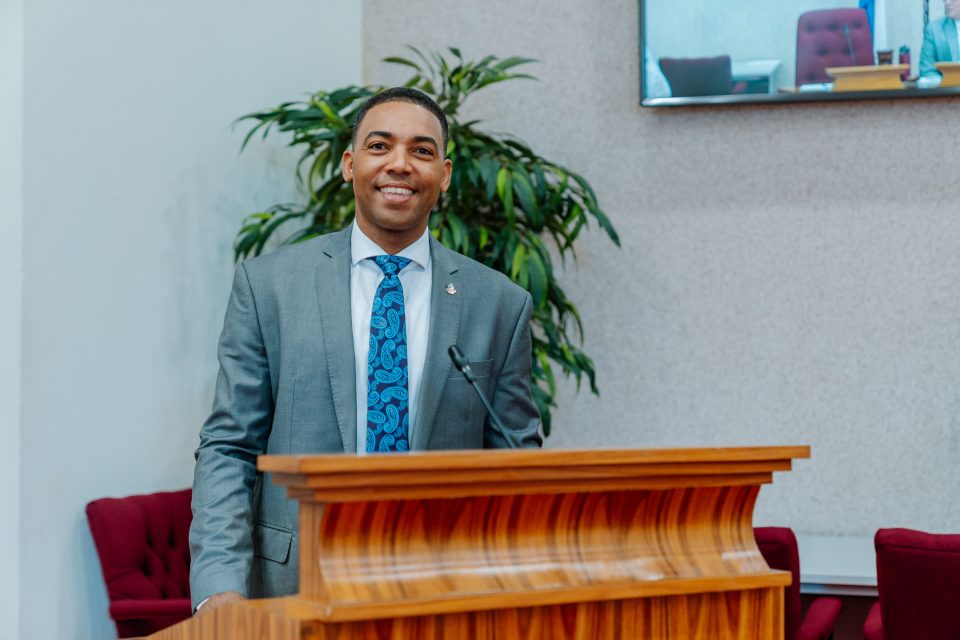
Recently, the Government presented the opening of the waste zone in Barcadera as a firm step toward a cleaner Aruba. In relation to this, MP Hendrik Tevreden pointed out that while every citizen wants a clean island, the real debate goes deeper.
According to Tevreden, the crucial question to be answered is whether we are investing in a modern, sustainable waste management system or simply improvising with public funds. He clarified that he is not questioning the intention to keep Aruba clean, but the lack of transparency and the way a project of national importance is being implemented without Parliament knowing the main details.
The MP emphasized that, to date, there is a total lack of clarity regarding which waste management model Aruba will apply. He pointed out that, although there is a site for dropping off waste, the big question is what happens after the trash is unloaded. Tevreden questioned whether the waste is actually being separated, recycled, reused, or exported, or if everything ultimately ends up in the same dump. He emphasized that as long as these details are missing, it is difficult to talk about sustainability.
International organizations demand a comprehensive plan International organizations such as the World Bank, UNEP, and the OECD reach the same conclusion: modern waste management does not start with a trash bin, but with a structured system. In this context, the MP explained that Aruba needs a management strategy that prioritizes waste reduction, source separation, recycling, reuse, responsible treatment, and measuring results—aspects that are precisely missing from this public discussion.
Concern over the use of ATA funds A serious point of attention in the current debate is the use of Aruba Tourism Authority (ATA) funds. Although ATA has a crucial role in tourism promotion, Parliament has the right and duty to question: where does the responsibility of this entity end? If ATA starts financing projects that structurally fall under the direct responsibility of the Government, Parliament’s ability to exert effective control over those expenses is weakened.
Tevreden clarified that this is not an attack on ATA. However, he pointed out that Parliament must act diligently when entities that do not fall under the same level of parliamentary control start funding more and more public tasks. According to the MP, transparency cannot depend solely on good intentions but must be guaranteed by a structural control system.
Lack of a national vision for waste The MP emphasized that Aruba needs a national vision for waste. Although he acknowledges that the previous minister did not leave this situation clear, Tevreden explained that Aruba needs much more than just a place to drop off trash. Clear goals must be set to reduce waste, increase recycling, stimulate reuse, manage hazardous waste, stop illegal dumping, and prepare the island for the challenges brought by tourism and population growth.
For this reason, Parliament will continue to ask the necessary questions. Tevreden stated that he has already submitted 190 questions from various angles on this topic and is awaiting responses from the ministers concerned. He concluded that this questioning is not because he is against progress, but precisely because progress must be built on transparency, accountability, and good governance.